Staying Connected in Thailand: Tourist SIMs, Networks & Coverage
Thailand's three main carriers offer tourist-friendly prepaid SIMs at airports and convenience stores, but understanding costs, coverage gaps, and data needs will save you money and frustration.
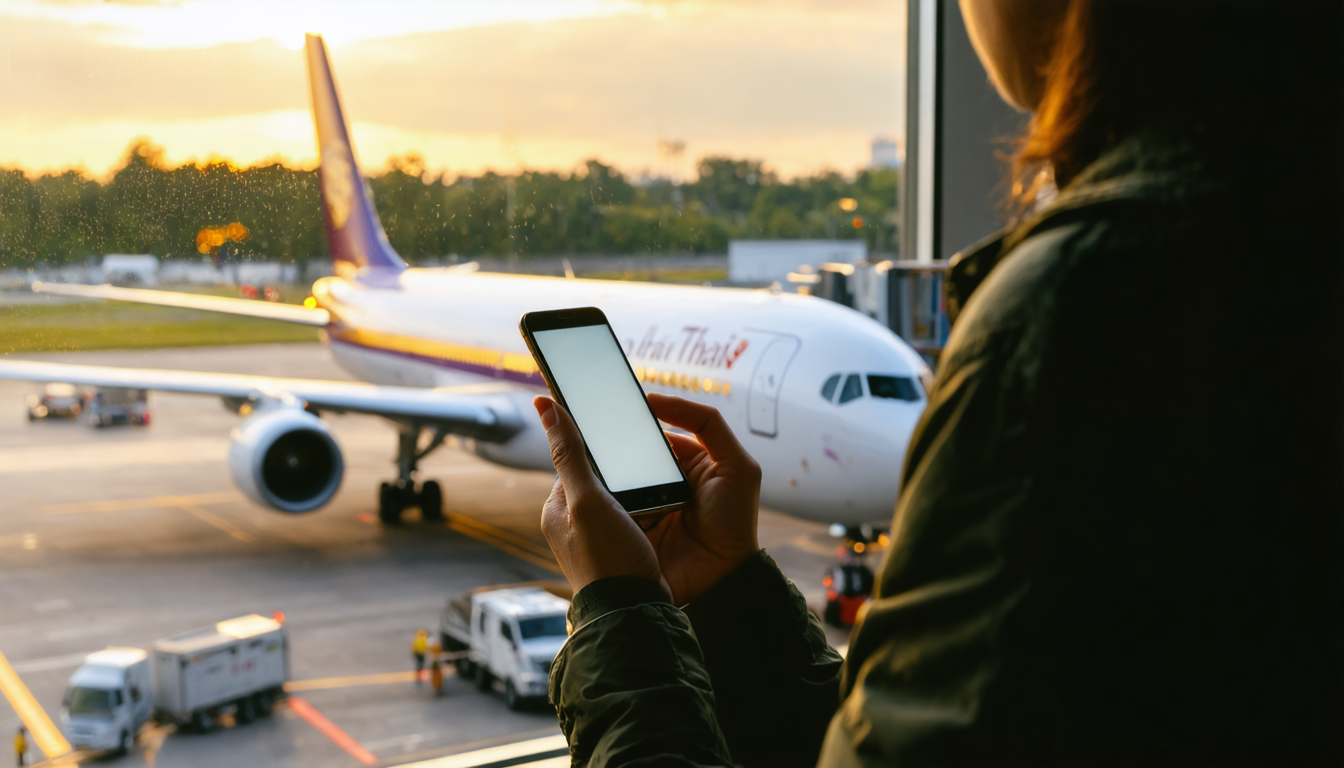
Thailand welcomes over 34 million international visitors annually, and most arrive expecting seamless mobile connectivity across Bangkok's bustling streets, island beaches, and northern temples. The good news: Thailand's telecom infrastructure is solid, with three major carriers competing aggressively for tourist dollars. The catch: roaming charges from your home carrier can spiral quickly, and knowing which local network works best in each region takes planning.
The Big Three: AIS, dtac & TrueMove H
Thailand's dominant carriers are AIS (state-owned, strongest nationwide coverage), dtac (good urban and tourist-area speeds), and TrueMove H (competitive pricing, especially strong in 5G zones like Udon Thani's Red Lotus Sea, popular with photographers). All three operate 4G/LTE reliably in Bangkok, Phuket, Krabi, Chiang Mai, and along major highways. Coverage thins in remote hills and deep jungle, but tourist hotspots are well-served. Voice apps follow local telecom rules; check your home carrier's policy before relying on VoIP for critical calls.
Tourist SIM: Where to Buy & What to Expect
Airport counters (Suvarnabhumi, Don Mueang, Phuket, Chiang Mai) stock all three carriers' tourist packages. You'll need your passport. Prices typically start around 300–500 THB (~$8–14 USD) for a SIM card plus initial data credit (usually 5–10 GB for 7–15 days). 7-Eleven and other convenience stores also sell tourist packages, though selection and English support vary. Activation is instant; a Thai phone number arrives on the SIM.
The trade-off: you'll lose access to your home number's SMS and WhatsApp during your stay (unless you use WhatsApp Web). If you need to keep your own number active for work or two-factor authentication, a local SIM alone won't solve that.
Data Needs & Roaming Reality
Most travelers use 2–4 GB per week for maps, messaging, social media, and casual browsing. Heavy streamers or video-call users should budget 5–7 GB. Tourist SIM top-ups are cheap: 100 THB (~$3) typically adds 2–3 GB for 7 days. International roaming day-passes from US or EU carriers often cost $10–15 for 500 MB–1 GB, making them a poor value compared to local SIMs.
Coverage in popular regions is reliable: Bangkok's BTS and MRT have 4G; islands like Koh Samui, Koh Phi Phi, and Phuket have solid signals; Chiang Mai and the north are well-covered. Expect spotty service in remote national parks or deep rural areas, but tourist trails and guesthouses typically have good connectivity.
A Simpler Alternative
If keeping your home number active matters to you—for WhatsApp, SMS codes, or staying reachable—a tourist SIM means switching devices or juggling SIM cards. A travel eSIM lets you keep your regular SIM in place while adding a prepaid local data plan instantly. Doft eSIM delivers a QR code by email within seconds of payment, no airport queue needed. Plans come in a range of data sizes and work across Thailand's major networks. Your own number stays active on WhatsApp and SMS throughout your trip, and 24/7 support is available if coverage questions arise.
Whichever route you choose, a little upfront research beats surprise bills. Thailand's networks are traveler-friendly—just plan ahead.
Source: news.google.com
Traveling soon?
Get your eSIM in minutes and land connected — plans from $2.99.